Monday, April 8, 2013

Hiroshima and Nagasaki: Then and Now

In the summer of 1945, the Empire of Japan suffered a nuclear attack by the United States, ordered by the President Truman. On August 6, the bomb Little Boy was dropped on the city of Hiroshima and on August 9 the Fat Man bomb on Nagasaki. It is estimated that both nuclear weapons took the lives of 220,000 people. Furthermore, the effects of radiation on the surviving population caused serious health problems, including numerous cases of fatal cancer.

Cloud after the Hiroshima bomb (left) and Nagasaki (right) .


Getting to Hiroshima and Nagasaki?

  • From Tokyo: there are direct flights from Tokyo's Haneda airport that take us to Hiroshima and Nagasaki (about 1h45min) but their prices are very high (about 600 euros). A cheaper option is to go by train from Shinagawa Station (Tokyo). We can reach Hiroshima in 3h 40min. and the ticket price is usually around 150 euros. 
  •  From Osaka: from Shin-Osaka Station you can take the Nozomi train that leads to Hiroshima in 80 minutes.

Once in Hiroshima we can take a train ride to Nagasaki changing at Hakata (about 3 hours).
For schedules and train tickets in Japan there is a page that I recommend:


HIROSHIMA


Hiroshima 1945/Hiroshima 2006 ( photo der.: Voogd075 )


Map of the spread of fire caused by the bomb in Hiroshima.


The Peace Memorial (Genbaku Dome)

Location : here.  
Tram stop: Genbaku Dome Station.  
Virtual Tour of the memorial: 
http://www.pcf.city.hiroshima.jp/frame/Virtual_e/tour_e/guide1.html

The Peace Memorial houses the ruins of the adjacent buildings to the center of the explosion in commemoration to the victims.


 Panoramic of Peace Memorial Park in Hiroshima. (photo: Dean S )


Dome Genbaku before 1945, following the explosion and as it looks today.


Museum Peace Memorial

Location: here .  
Tram stop: Fukoromachi / Genbaku Dome  
Official Website: http://www.pcf.city.hiroshima.jp/index_e2.html 
Opening hours (admission until half an hour before closing):
From 1 March to 31 November : 8:30-18:00
From December 1 to February 28: 8:30 to 17:00
From August 1 to August 31: 8:30 to 19:00  
Admission: 50 yen (0.50 euros) This museum covers the history and reconstruction of Hiroshima from 1945 through models, photographs, objects collected from the ruins, etc.


Friday, March 15, 2013

Free travel guides and maps of Normandy

  • Complete guide dedicated to the historical sites of Normandy, created by the Association Normandie Mémoire with details of museums and monuments. You can download it in pdf.


  •  2013 Tourist Guide of Normandy: The delegation of  Bessin Normandy tourism published in its official website a pdf of 2013 Normandy travel guide in English. The guide contains information on the landing beaches, museums, restaurants and accommodation, as well as maps of the region. For a free guide is quite complete and brings a calendar of events that includes the d-day festival . Click the image to download the pdf.


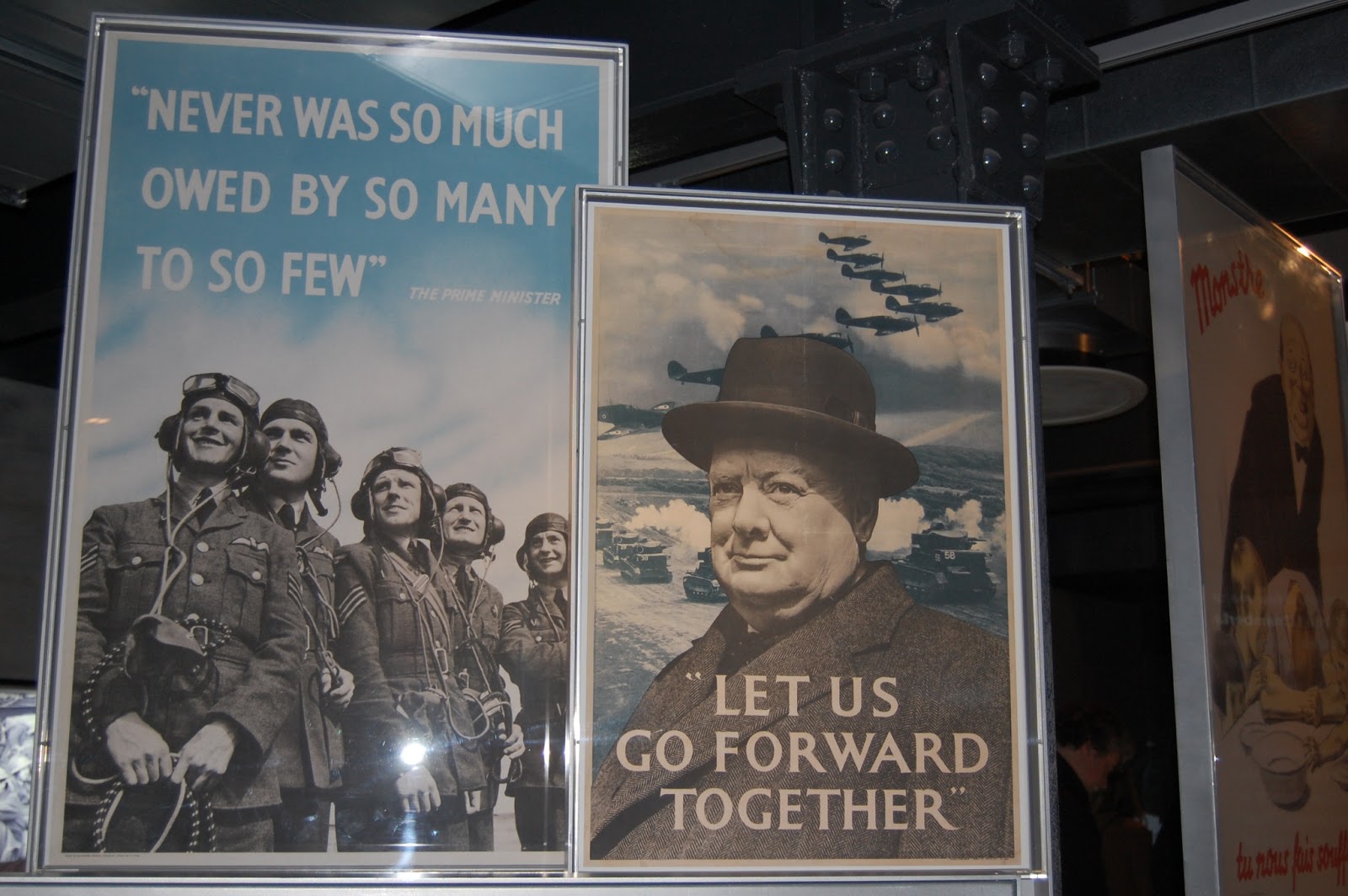
Churchill war rooms in London

This is a museum placed in a bunker. It belongs to the Imperial War Museum in London. The war rooms were built in 1938 as a measure against future possible air attacks. After the outbreak of the war the government center with Churchill in command was transferred to the basement. Located in the Treasury building in Westminster, just a short walk away from Big Ben. 


The tour has two parts. On one hand the tour of the bunker with recreations of all the rooms and on the other hand a large exhibition hall dedicated to Churchill, exhibiting documents, videos and photos from his youth until his funeral. It shows the personality of the former British prime minister during World War II.

Plano.

BUSINESS INFORMATION
Location: here .
Metro station: Westminster (green lines, yellow and gray)
Buses: 3, 11, 12, 24, 53, 87, 88, 109, 148, 159, 184, 211, 453
Opening hours: 9:30 to 18:00 (last admission 17:00)
Closed from 24 to 26 December.
Admission: 17 pounds (20 euros). Audio guide included.
The museum is very interesting but it has few visitors. The entrance it's a little bit hidden in a side of King Charles street, under the Clive Steps.

In the area of the museum about Churchill you can find some items of his personal life, from his Nobel Prize to pictures painted by him. 
A little photo gallery of the place:


Tuesday, March 12, 2013

The forest of the Katyn massacre

In the spring of 1940, the Katyn Forest witnessed the massacre of 20,000 Polish officers and civilians accused of spying by the NKVD. The slaughter was carried out under the command of Stalin but the Soviets attributed to Germany. It was not until 1990, when Mikhail Gorbachev brought to light the hidden documents. After that, Russia recognized their involvement in the incident. Years later a memorial was set in the place.
For Poles is a cursed place since, in 2010, President Kaczynski and 95 others including leading figures of Polish government and clegy suffered a plane crash with no survivors when traveling to Katyn to commemorate the 70th anniversary of the slaughter.


VISITOR INFORMATION

Official website: http://www.katyn-memorial.ru
Opening hours: 9:00 to 17:00
Guided tour: 800 rubles (20 euros)  
Museum admission: 50 rubles (1.25 euros)


The memorial complex was inaugurated in 2000. It consists of a large cemetery, some monuments and a museum. All Polish officers killed in the slaughter of Katyn were buried in mass graves in June. Part of the cemetery is Russian and here are buried more than 6,000 victims of the Soviet Great Purge of 1930.


GETTING TO KATYN FOREST

Location: here .

Located in Russia 400 km away from Moscow and 320 km away from Minsk. The railway line that links Moscow (Belarus station) to Minsk (Minsk station Pas) passes through Smolensk, 20 km away from Katyn. The journey takes about 4-5 hours from both cities.  
Once in Smolensk you can take the bus #101 (Smetanino direction) to Kozyi Goryy. A sign indicates: "Memorial Polskim ofitseram pogibshim v Katyni".


Fuentes:
http://www.lonelyplanet.com/russia/western-european-russia/katyn-forest/transport/getting-there-away
http://www.archives.gov/research/foreign-policy/katyn-massacre/
http://www.katyn.org.au/